
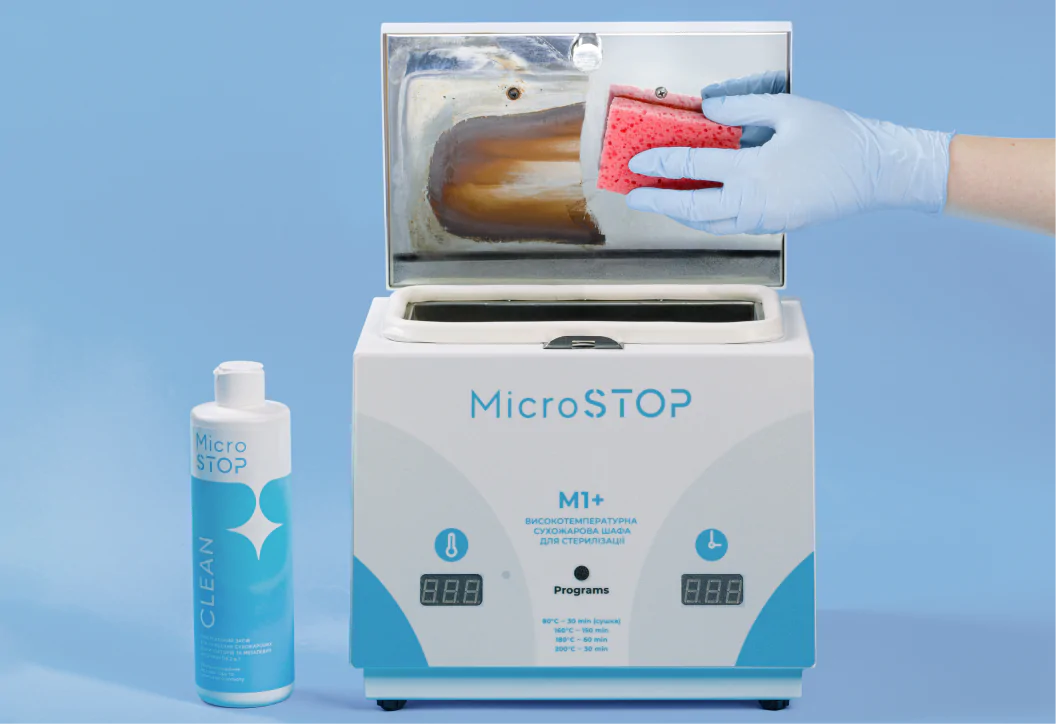
Why does plaque appear on a dry heat? Does it harm the sterilization of instruments? How to get rid of it?
The appearance of yellow plaque in the sterilization chamber is an almost inevitable process. At first, it may be imperceptible, but over time it becomes more pronounced and begins to bother the masters.
The main causes of plaque:
Combustion products at high temperatures.
Most often, yellow plaque occurs if you sterilize instruments in kraft bags. Some components of kraft bags are released under the influence of high temperatures and gradually form plaque.
Residues of disinfectants and detergents.
If the instruments or the dry heat chamber are not washed and dried well enough, disinfectant residues can “bake” during sterilization and settle on the walls of the chamber.
Does plaque harm sterilization?
Here it is important to distinguish:
Does it affect the operation of the dry heat?
The sterilization process itself is not affected by plaque. However, the appearance of the equipment may deteriorate, which may affect its overall appearance.
Does it affect the operation of the instruments?
Here the consequences are more serious: plaque affects coatings, cutting parts and small mechanisms. Over time, this can reduce the sharpness of the instruments and shorten their service life.
How to prevent plaque formation?
Clean and dry the instruments thoroughly.
Completely remove residues of detergents and disinfectants before sterilization, and dry the instruments before loading them into the dry heat.
Choose the optimal sterilization mode.
If you sterilize in kraft bags, do not exceed the temperature of 180°C.
Use only special products to clean the dry heat chamber.
They are safe for the coating and will not damage the equipment. “Folk” remedies such as aggressive chemicals or abrasives can leave scratches and make the situation worse.
✅ To prevent dry heat, it is enough to wipe the walls of the sterilization chamber with MicroSTOP Clean dry heat sterilizer cleaning agent every 24-36 working hours. This product works delicately, effectively and does not damage the coating.
How to “treat” dry heat from heavy plaque?
Sometimes prevention is no longer enough – plaque has accumulated so much that the walls of the chamber look dull or even brown. In this case, you need to proceed to “treatment”.
Cleaning steps:
- You will need: “Microstop Clean”, protective gloves and a soft sponge or cloth.
Important! Before starting work, be sure to unplug the oven from the mains and wait until it has completely cooled down. - Pour the product directly onto the sponge and spread evenly over the lid and other metal surfaces. Important: do not apply the product to the rubber parts of the door or lid, as well as to the oven body.
- Wait from 15 to 30 minutes, depending on the degree of contamination.
- Remove the plaque with a soft cloth or sponge.
- Avoid metal brushes or abrasives – they will scratch the surface of the chamber, and subsequent layers of plaque will settle even faster.
Important clarification!: Microstop Clean is used only for steel parts of the oven. It cannot be applied to the body and rubber inserts – the coating may be damaged.
✅ Proper care and prevention will not only keep the oven in good condition, but also extend its service life.
May be of interest:


 Telegram
 Viber
Viber
 WhatsApp
